

From ancient monuments to celestial knowledge
Foundations of Archaeoastronomy
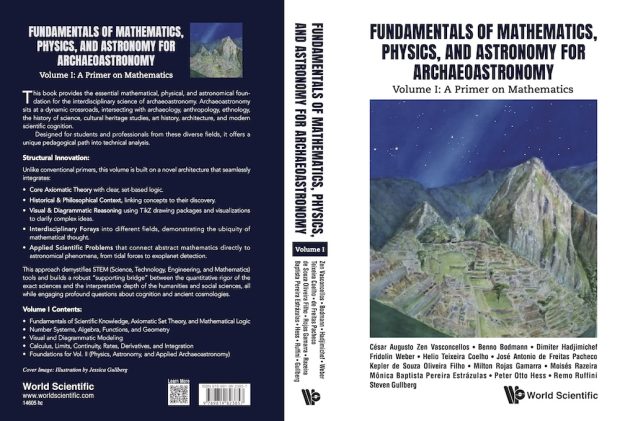
A multidisciplinary introduction connecting mathematics, astronomy, physics, and the study of ancient civilizations
Together with a group of international researchers, Professor Weber contributed to the development of this interdisciplinary work, which brings together perspectives from physics, astronomy, archaeology, and cultural studies. The project was motivated by the growing need for educational resources that bridge the gap between the humanities and the quantitative sciences in the study of ancient civilizations.
Archaeoastronomy combines the study of monuments, calendars, myths, inscriptions, and cultural traditions with modern scientific approaches to astronomy and physics. Understanding these connections requires familiarity with concepts drawn from both the humanities and the physical sciences. This volume was written to provide readers from diverse academic backgrounds with a common technical foundation and an accessible entry point into the field.
The first volume focuses primarily on mathematics and introductory astronomy, while the second volume extends the discussion to physics, astronomy, and broader applications in archaeoastronomy. Together, the series offers a structured pathway into the study of how ancient civilizations understood, interpreted, and incorporated celestial phenomena into their cultural and social worlds.
The book is intended both as a teaching resource and as a reference for students entering the field, offering a supportive framework for navigating the broad and interdisciplinary nature of archaeoastronomy.