New study examines rotating strange dwarfs and how exotic quark-matter stars may mimic ordinary white dwarfs observationally.



From Classroom to Clinical Leadership: A Medical Physics Mentorship Comes Full Circle
SDSU associate professor Mauro Tambasco reconnects with his first master’s graduate,

Mathematics and Astronomy for Archaeoastronomy
An interdisciplinary introduction to the mathematical, physical, and astronomical foundations of archaeoastronomy and the scientific study of ancient cultures.

Congratulations Harry Glazebrook, for Taking Home 2nd place in the Norm Baily Graduate Awards!
Harry’s presentation on “Building Better Radiotherapy Models with 3D Bioprinting” highlighted how we can improve tumor modelling…
Why Physics at SDSU?
Physics explores the foundational processes of life and everything in the universe. In addition to learning fundamental principles, our students acquire extensive programming skills as well as expertise in math, modeling and data analysis. We offer a variety of specialized electives in quantum nano-materials, biological physics, astrophysics and more.
A key feature of the physics program is the active involvement of both undergraduate and graduate students in research. Students collaborate with faculty on research projects, forming professional relationships while making real scientific contributions. Students in the bachelor’s and master’s programs are required to complete a thesis prior to graduation, which often earns students co-authorship on a paper published in a peer-reviewed journal.
Earning a degree in physics opens doors to careers as diverse as the field itself, including research and development, management or administration in industrial laboratories or government agencies, secondary teaching, technical sales, electronic design, and laser instrument research. Graduates are prepared for roles such as data scientist, software developer, sound engineer, equipment technician, theorist and instructor.
111
Enrollment: Fall 2025
84
Bachelor's
27
Master's
21
Degrees Awarded: 2024-2025
9
Bachelor's
12
Master's
Research Areas

Quantum Materials
Exploring how atomic structure and quantum effects give rise to novel material properties.
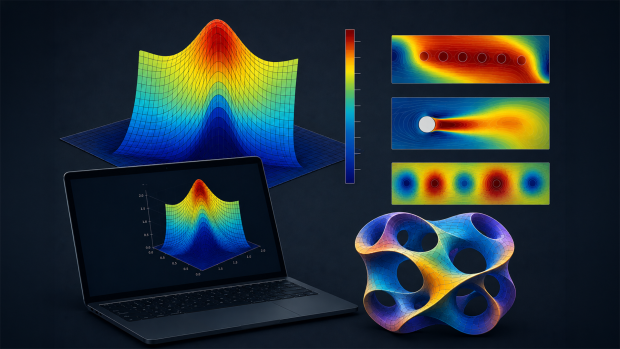
Computational Physics
Supercomputers and sophisticated models help answer questions about the universe at small and large scales.
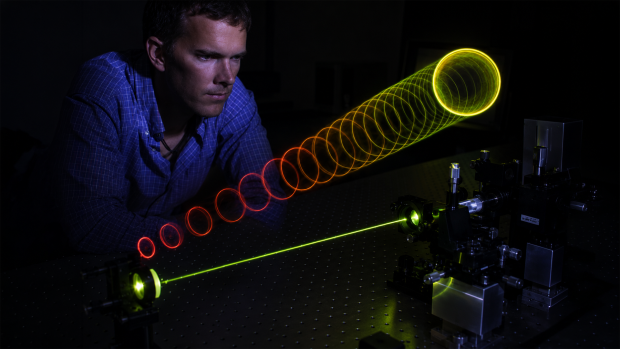
Optics
Manipulating ultrafast laser light for applications in microscopy, neuroscience, and microfluidics.
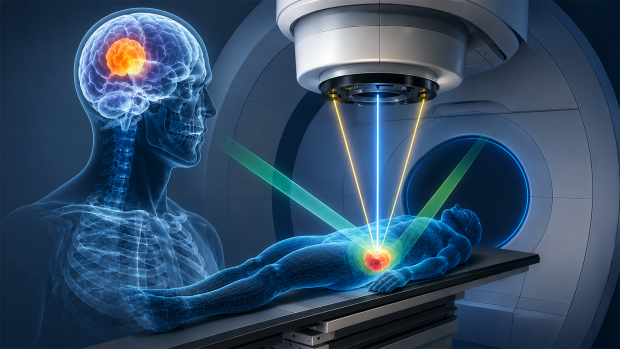
Medical Physics
Physicists are leading advances in radiation therapy and magnetic resonance imaging.

Condensed Matter Physics
Investigating how interactions among atoms and electrons produce novel materials with unique electronic, magnetic, optical, and superconducting properties.
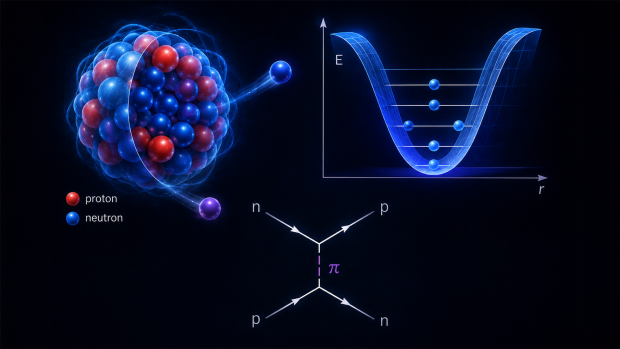
Theoretical Nuclear Physics
Developing mathematical and computational models to understand the structure of atomic nuclei and the fundamental forces that govern their behavior.
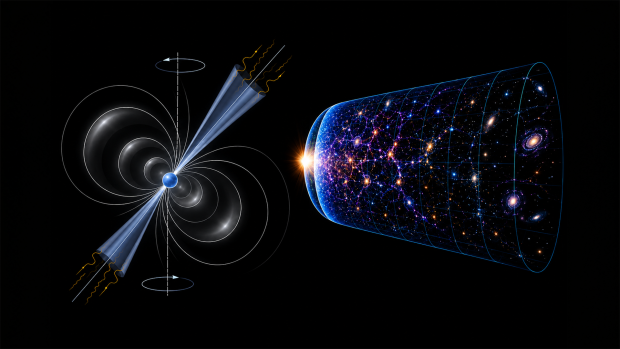
Theoretical Astrophysics
Investigating black holes, neutron stars, gravitational waves, and the evolution of the universe through theoretical and computational modeling.
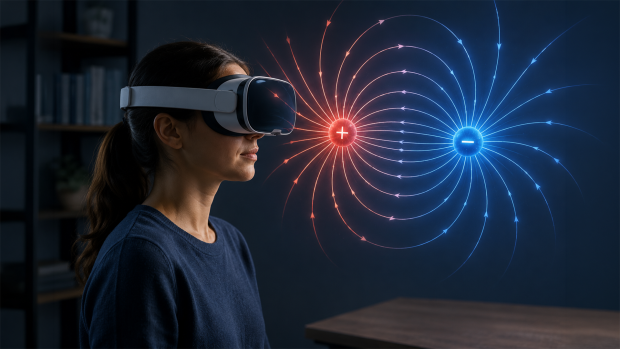
Physics Education Research
Investigating how students learn physics and developing evidence-based teaching methods that improve learning and broaden participation in STEM.
Announcements
Physics Faculty Co-Authors New Study on Cosmic Expansion and Dark Energy
New cosmology study explores dark energy and cosmic expansion using pseudo-complex general relativity and recent DESI observational data.
New Certificate in Artificial Intelligence and Computational Modeling for Physics
New certificate program launching Fall 2026 focused on artificial intelligence, scientific computing, and computational modeling applications in modern physics research.
2026 Senior Student Research Presentations
Senior students present their capstone research projects, highlighting diverse topics and the culmination of their undergraduate work in physics.
SDSU Physicist Publishes New Framework for Quantum Field Theory in Curved Spacetime
A new study develops a framework for quantum fields in curved spacetime, clarifying how gravity affects particle interactions near black holes.